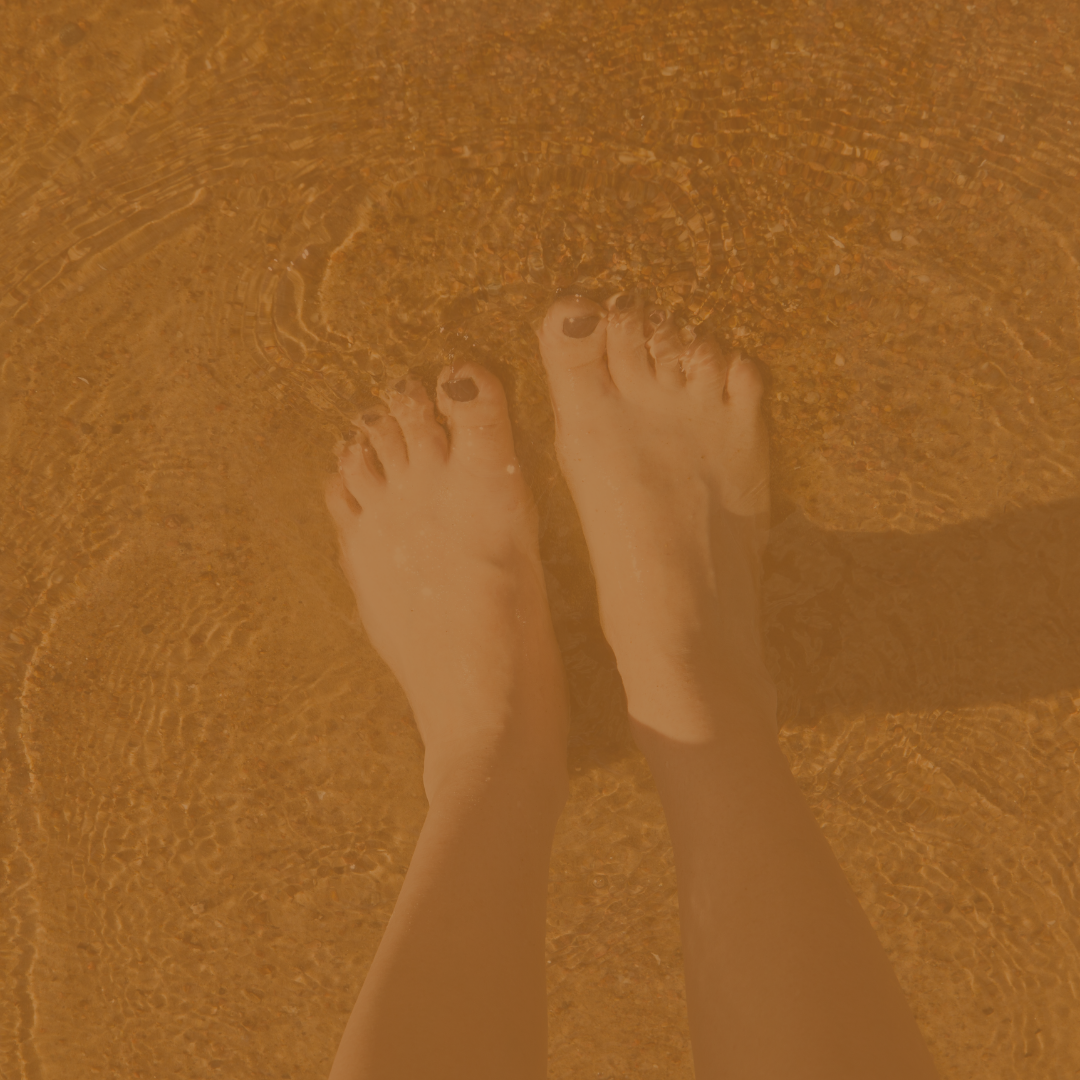
Reconnecting with
the earth
Being earthed whist we sleep supports health and wellbeing.
What is earthing?
Earthing — sometimes called grounding — is the simple practice of making direct physical contact with the earth's surface. This might mean walking barefoot on grass, sand or soil, lying directly on the ground, or using a grounding mat or sheet indoors that connects to the earth via a conductive lead.
The idea behind earthing draws on the theory that the earth's surface carries a mild natural electrical charge, and that our modern lives — spent largely indoors, in shoes, and surrounded by synthetic materials — leave us disconnected from it. Reintroducing this contact may support a general sense of balance, calm and physical comfort.
We are, quite literally, of the earth.
For most of human history, people would have spent their lives — including their sleeping hours — in direct contact with the ground. There was no insulation between the body and the earth in the way there is today.
Modern life has changed that.
We sleep on mattresses and beds, above floors and foundations, and are surrounded by materials that separate us from the earth. We may occasionally walk barefoot on grass, sand or soil, but that contact is usually brief.
Why an earthing sheet?
The earth carries a natural negative electrical charge, while free radicals are described within the earthing model as positively charged.
An earthing sheet is designed to reconnect the body electrically with the earth while you sleep. A conductive thread within the sheet is connected to the earth connection of a properly grounded socket, allowing electrons from the earth to reach the body.
According to the earthing model, these electrons can neutralise positively charged free radicals.
The idea is simple: Earth → electrons → neutralising free radicals → supporting the body's natural healing processes.
Rather than trying to force the body to heal, the principle is to give it the conditions and resources it needs to do what it is naturally designed to do.
Sleep + healing = maximum opportunity to heal, restore and regenerate
I place particular importance on earthing during sleep, rather than relying solely on occasional barefoot contact during the day.
A ten-minute barefoot walk may be enjoyable and beneficial in its own right, but an earthing sheet can provide a continuous connection for the entire night: the very period when it is naturally focused on healing, restoration and regeneration.
Earthing bed sheets can be obtained from the website www.royriggs.net They are cheaper than others out there, machine washable and last indefinitely. Please note that I have no affiliation with the website.
Earthing is so much more that walking barefoot
The importance of earthing comes back to one simple idea: we are designed to heal, restore and regenerate while we sleep.
The body is constantly producing free radicals. When free radicals become excessive, they contribute to oxidative stress and inflammation. Free radicles are positive in charge and antioxidants help to neutralise them — and are an important part of the body's natural defence and repair processes.
However, I believe that nature provided us with another important source to reduce free radicles: the earth itself.
Walking barefoot is wonderful — but it doesn't provide the same continuous connection as earthing while you sleep.
Sleep is when the body has its greatest opportunity to rest, repair and regenerate. So, from my perspective, this is when maintaining a connection with the earth becomes particularly important.
Further reading
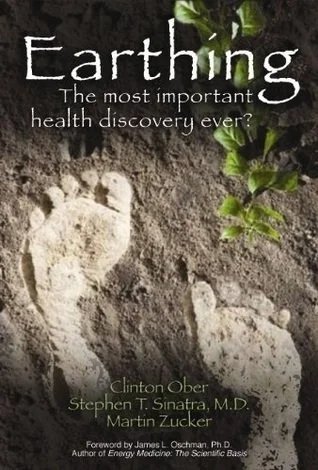
The theory of earthing is explored in detail in Earthing: The Most Important Health Discovery Ever? by Clinton Ober, Stephen T. Sinatra and Martin Zucker, which I draw on as a starting point for anyone wanting to read further into the subject.
Core themes in Earthing: The Most Important Health Discovery Ever?:
Disconnection from the earth — the idea that modern life (rubber-soled shoes, elevated buildings, synthetic flooring) has physically insulated humans from the earth's surface in a way earlier generations weren't.
Free electron transfer — the central mechanism the authors propose: that the earth carries a supply of free electrons, and skin contact allows these to transfer into the body, acting as antioxidants that neutralise excess free radicals.
Inflammation — a major focus of the book; the authors argue chronic low-grade inflammation underlies many modern illnesses, and that earthing may help regulate it.
Sleep and cortisol rhythms — the authors describe small studies suggesting grounding normalises cortisol secretion patterns and improves sleep quality.
Blood viscosity and circulation — the book cites research suggesting grounding reduces blood cell clumping ("zeta potential" changes), which the authors link to cardiovascular benefits.
Pain and chronic conditions — case studies and anecdotal reports throughout the book link earthing to reduced pain, faster wound healing, and improvement in various chronic conditions.
A "back to nature" narrative — a broader wellness philosophy that reconnecting with natural elements restores something modern life has stripped away.
"We can never have enough of nature."
— Henry David Thoreau, Walden (1854)